
Food Service Digital Strategy That Gets Customers
A plain plan for small food service owners: capture every inquiry, follow up fast, and connect the tools you already pay for. No new app required to start.
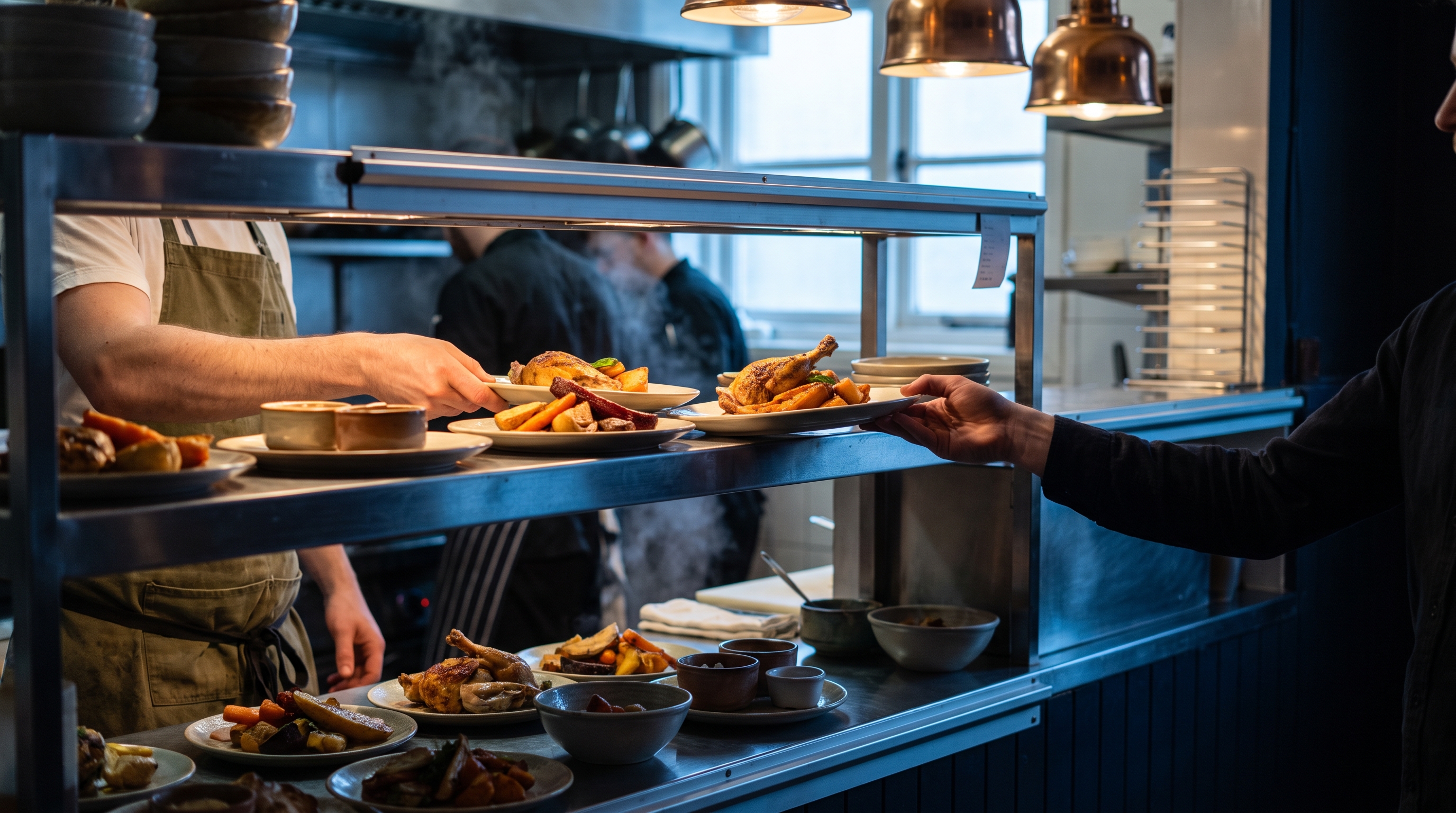
A food service digital strategy starts with one question: what happens when someone asks for a table, a catering quote, or a delivery order? Capture every inquiry in one place, answer it fast, and connect the tools you already pay for. Strategy comes before software, and a simple plan beats a new app.
Your menu is probably fine. Your food is probably good. The trouble is what happens after a stranger reaches out and you're in the middle of a lunch rush, handling marketing in the gaps. That's the normal setup for a restaurant, a caterer or a specialty food supplier with a handful of staff, and it's where customers quietly get lost.
The website, the booking tool, the email account and the social pages all exist. None of them talk to each other, and nobody owns what happens next. We wrote about that problem in more depth in why leads slip through the follow-up gap.
What does a food service digital strategy include?
It includes four things: a clear goal in plain numbers, one place where every inquiry lands, a rule for how fast you reply, and a weekly look at what's working. Everything else, from the website to the review requests, serves those four.
There's no app to download and no platform to buy. We start with strategy because the plan decides which tools you need, and buying the tool first is how owners end up with a pile of subscriptions and no system.
The goal comes first. Pick one number you care about this quarter. For a caterer it might be quote requests per month, and for a restaurant it might be private event bookings or online orders. Write it down, because every later decision gets easier when you can ask whether it moves that number.
Where do customers find a food service business before they call?
They look online first, usually on a search engine and then on your menu page. Per Market.us, 84% of diners check menus online before deciding on a restaurant, and 29% order takeout or delivery at least once a week.
Search is where a lot of that starts. Digital Success reports that approximately 93% of online experiences begin with a search engine. That's a general figure across the web, not a food service measurement, so read it as a direction and not as a forecast for your town.
Then comes trust. The same Digital Success article cites a BrightLocal survey finding that 84% of people trust online reviews as much as personal recommendations. When a customer can't taste the food before choosing, your reviews and your menu page do a lot of the selling before anyone speaks to you.
So if your hours are out of date or your menu lists a dish you dropped last spring, you can lose an inquiry you never knew about.
How do you capture every inquiry?
Give every channel one destination. Phone calls, web forms, direct messages, delivery platform messages and catering requests should all end up as a record in a single list with a name, a contact method and a status. If an inquiry lives only in someone's inbox or memory, it's already at risk.
The table below shows where inquiries usually arrive in a small food service business and what each one needs. The channels are the common ones. Your list may differ.
| Where it arrives | What the customer wants | What the system should do |
|---|---|---|
| Website form | Catering quote, event booking, a question | Log it, send an instant confirmation, alert the owner |
| Missed phone call | A table, an order, hours | Send a text back with a booking link or a callback promise |
| Instagram or Facebook message | Menu, availability, price | Route it to the same list, reply from one inbox |
| Review or Google listing question | Reassurance before choosing | Answer in public, then invite a booking |
| Delivery platform | A one-time order | Collect an email where the platform allows it, thank the customer |
The last row matters because delivery apps are big. According to Caterboss, a US study showed that 111 million people use food delivery apps. Many of those customers know the platform's name and maybe not yours, so where the platform's rules let you, give them a reason to find you directly next time.
Once the list exists, the rest of the system has something to work with. That's what a CRM is, and we cover how we build one in marketing systems and automation for small businesses. You may already own one. Many owners do.
How fast should you follow up?
Faster than whoever else the customer contacted. We don't have a verified food service figure for the ideal reply time, so we won't hand you a number that looks precise. What we can say is that a customer asking about a wedding for 120 guests has usually asked more than one caterer.
So set your own rule and write it down. A workable version looks like this:
- Every inquiry gets an automatic reply within a few minutes, even at 10 p.m.
- A person replies personally the same day, or by the next morning if it came in overnight.
- If there's no answer in two days, one friendly nudge goes out.
- After that, the inquiry is marked closed or booked, never left open.
The automatic reply isn't there to fool anyone. It tells the customer you got the message and when they'll hear from a human.
Then the human part has to happen. A system that sends a confirmation and then goes quiet is worse than no system, because it sets an expectation you don't meet.
How do you connect the tools you already own?
Start by listing them. Most owners have a website, an email account, a booking or reservation tool, a point-of-sale system and a few social pages. Write each one down with who uses it and what it holds, then draw the line from "customer reaches out" to "customer is served" and mark every spot where someone has to copy information by hand.
Every hand-copy is a place a lead can drop. Close those first. A booking tool that sends confirmed bookings into your customer list saves a step, and a form that creates a record and a task for you saves another.
You may not need new software at all. We design systems around what you already own, then fill the gaps. If you own something that can't connect to anything else, that's the moment to replace it, not before.
One caution about the technology side. Caterboss notes that one study shows 52 per cent of restaurant operators plan to use back office technology in 2024. Back office tools like payroll and inventory are useful, but they don't bring in customers, so keep the customer-facing system and the kitchen-facing system as separate decisions.
What should you measure each week?
Five numbers cover most of it: new leads, pipeline value, deals closed, lead-to-booking rate and cost per lead. For a food service business, "deal closed" might mean a confirmed catering order or a booked private event. Define it before you start so the number means the same thing every week.
These are the same five measures we set up on client dashboards: new leads, pipeline value, deals closed, lead-to-demo rate and cost per lead. In a food service setting you'd swap "demo" for "booking" or "tasting." A dashboard shows what's tracked. It doesn't promise a result, and a week with bad numbers is still useful information.
Email is worth setting up once the list exists. Digital Success cites roughly a 42:1 return on email marketing, but that's a vendor-blog average across industries, so treat it as a reason to try email and not as something to budget around. A short monthly note with a seasonal menu or an event opening is enough to start.
What are the common mistakes?
The first mistake is buying before planning. An owner sees an ordering app or a loyalty tool that looks good and signs up, and six months later it doesn't connect to anything and nobody checks it. Decide the goal and the follow-up rule first. Then ask whether you need the tool at all.
The second is spreading thin across every platform. You don't need to be on five social networks. Pick the one or two where your customers actually ask questions and answer them well.
The third is letting the menu page go stale. If a customer reads old hours or a dish you no longer serve, you've lost some of their trust before they've walked in, so put a monthly check on someone's calendar.
The fourth is ignoring reviews. A reply to a bad review is read by the next person deciding, not just the one who wrote it. Reply the same week, keep it short, and be honest about what you'll fix.
The fifth is measuring nothing. If you can't say how many inquiries came in last month, you can't tell whether anything you changed helped.
Is this the right fit for your business?
It depends, and we want to be plain about it. Food service isn't an industry we've published results for. We don't have a food service example to share, and we won't make one up.
What we can offer is the method. It works for any business where customers ask before they buy and where slow follow-up loses them. It isn't a fit if you want a tool installed and left alone, or if you want to automate before anyone has settled who the customer is and what you offer. In that case, start with digital strategy.
Two worries come up often. One is cost. We start with the plan before we build anything, so you can see what you'd be buying before you commit to the full system. The other is "I tried this and it didn't work." Most failed attempts bought a tool before anyone settled who the customer is and what the message should be, and that's the order we reverse.
If you're growing and have a team but no senior person setting direction, fractional CMO leadership is the other route.
FAQ
What is an example of a digital strategy for a food service business?
A caterer sets a goal of more quote requests, puts one form on the website, routes every inquiry into one list, replies automatically within minutes, follows up personally the same day, and reviews the numbers weekly. The tools can be ones the caterer already owns.
What strategies do food companies use to market their products?
Common ones are search visibility, an accurate menu or product page, review requests, email to past customers and social posts. Digital Success lists 11 strategies. For a small owner, the first priority is following up on the inquiries you already get.
How is AI used in the food and beverage industry?
According to Food Engineering, 39% of IDC survey respondents said AI had the greatest potential impact on their organizations. For a small owner, AI mostly drafts replies and automates follow-up, with a person approving what goes out.
How much time will this take me each week?
We haven't confirmed a typical owner time commitment, so we won't quote one. The aim is a short weekly review of five numbers and replies to the inquiries that need a personal answer. The rest should run in the background.
What to do today
Open your phone and write down every way a customer can reach you, then check where each one lands. If any of them lands somewhere nobody looks at daily, fix that one first. You run the business. We run the engine. If you'd like a second opinion, book a strategy session and we'll look at your setup with you. There's no pitch, just a plan you can use with or without us.
Keep reading
Marketing Systems and Automation for Small Business
Marketing systems and automation connect the CRM, email, website and booking tools you already own so no lead waits. Here is how the pieces fit, in order.
What Makes a Landing Page Work for a Small Business
A landing page works when the lead gets a reply, lands in your pipeline and gets followed up. Here is how to judge any page by what happens after the form.
Email Marketing Companies: What a Strategy Includes
Hiring an email marketing company? Here's what a real strategy includes, which five sequences to ask about, what it costs, and how to read the reports.